
The dental assistant’s checklist for negotiating salary

In an era of rising costs and evolving workplace expectations, dental assistants are paying close attention to how their salaries compare across states, practice settings, and experience levels. It’s essential for dental assistants to understand current pay trends to have a better idea of what a fair wage looks like in their state. This data can also influence discussions around raises and how dental assistants can negotiate a higher salary.
Asking for a raise can be intimidating, but preparation is often the key to a successful conversation. Here are some tips to effectively negotiate your salary.
Prepare data ahead of time
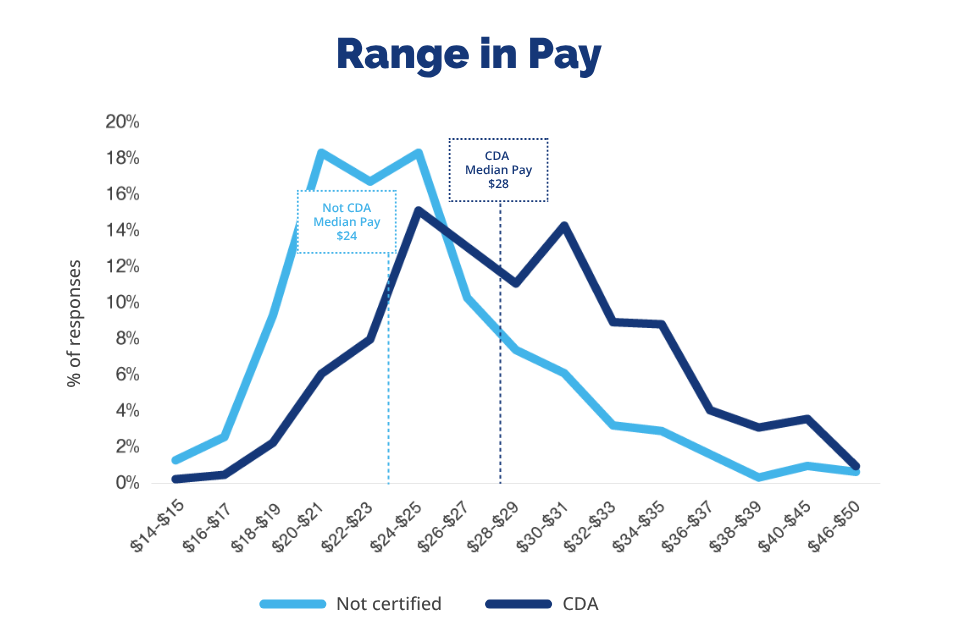
Before approaching your supervisor about a raise, research and gather key data points to present your case. DANB’s 2026 Dental Assistants Salary and Satisfaction Survey Report outlines significant data dental assistants can use to negotiate their salary. For instance, the median pay for Certified Dental Assistants (CDAs) is $28, while non-certified assistants earn an average of $24 an hour.
One dental assistant, Kishan, researched the local and national markets to have a baseline understanding of what dental assistants were making. He also gathered feedback from his team about their perspectives on pay. Kishan then used this information for a discussion around raises with his practice’s leadership.
It’s also important to consider local economic trends. Analyze the cost of living and inflation data in your state to better understand how they can affect your raise. Inflation in May 2026 was over 4%, but the typical raise for dental assistants is between 1% and 3%, according to DANB’s survey. This could be an important note to bring up with your employer to demonstrate why you are asking for a higher wage. Additionally, looking at pay for similar jobs in your area can show how your wage compares and what a competitive raise may look like.
Know your state requirements
All dental assistants should know the allowable duties in their state and the levels at which they can work. Performing more duties in the office or going above and beyond to maximize productivity can increase your value to the practice. Demonstrating everything that you do for the team gives your employer concrete examples of your role’s worth.
Speak with your coworkers
Seeking feedback, guidance, and support from other members of your team can help you prepare for this discussion. Discussing pain points within the practice and how higher wages can improve the situation can help influence raises.
For instance, Kishan noticed a high turnover rate among his practice’s dental assistants and learned that many felt undervalued compared to the demands of their work. To spark change, Kishan organized a meeting to gather his coworkers’ feedback and better understand their feelings toward pay. This led to leadership implementing a new pay rate in hopes of increasing dental assistants’ morale and productivity.
Stay calm, cool, and collected
Often, just starting a dialogue with your employer can open the door to a potential raise and new opportunities. Because pay is a sensitive topic, it’s best to present your information in a composed, professional manner. Putting your findings in writing can help keep you organized so you can be sure to cover all your points. You may feel a little nervous approaching this discussion, but remind yourself of how valuable you are to the practice and that you should be fairly compensated for your work.
Read more: