
What’s the secret to standing out in a dental assisting job search?

If you’re a dental assistant looking for a job, you probably already know that the application process can feel overwhelming. Search for “dental assisting jobs” online, and you’ll find hundreds, even thousands, of results. It’s often daunting just to find the right role where you want to work — and then you need to get your foot in the door and stay there.
How can qualified dental assistants land the interview and, ideally, the job? DANB’s latest Dental Assistants Salary and Satisfaction Survey results reveal that one of the secrets to standing out is earning Certified Dental Assistant (CDA) certification.
Amid an ongoing dental workforce shortage of qualified applicants to fill vacant positions, many practice leaders are looking for dental assistant job candidates who have earned DANB certification to invite in for an interview. And CDAs are the ones most likely to get the job offer and the higher salary. Here’s why.
CDA certification can bring your resume to the top of the stack.
There are millions of job openings each month across all industries nationwide, according to the U.S. Bureau of Labor Statistics. In dental assisting, about 53,000 openings for dental assistants are projected each year, on average. On the Dental Assisting National Board’s new job board alone, you can find nearly 100 recent job postings for dental assistants and office managers, and counting. Consider that for every job posting, there can be a pile of resumes submitted by hopeful applicants.
To prospective employers, certification is a green flag — “CDA” may be three letters, but they’re a big sign that you’ve done your homework in preparing for your career growth. Employers seek job candidates who are already knowledgeable about the practice and the role. If you are DANB certified, your resume will show that you are ready to join the practice, then hit the ground running.
“Being certified has always given me a leg up when interviewing for jobs,” attests Dorie Gomes, CDA, a lead dental assistant in Rhode Island with more than 25 years of experience. “[Hiring managers] already know you have the education and knowledge. They respect you more, and they know you’re serious about what you do, that it’s not just a job, it’s a career.”
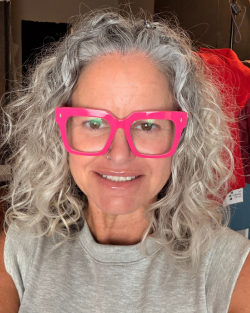
“Being certified has always given me a leg up when interviewing for jobs. [Hiring managers] already know you have the education and knowledge. They respect you more, and they know you’re serious about what you do, that it’s not just a job, it’s a career.”
— Dorie Gomes, CDA
“CDA certification promotes learning and continued education and care for the patients, which is the important part,” agrees Beverly Merklin, CDA, CDIPC, RDA, who has been CDA certified since 2012 and has more than two decades of dental assisting experience.
After many years in the same role, Merklin unexpectedly found herself launching a new job search earlier this year. Listing “CDA” on her resume likely brought it to the top of the list when her new employer was sifting through applications.
“I did find a great home in March with a wonderful team, and I’m happy to be there,” she says. “Certification helped me find the right practice for me.”
Kayla Johnson, CDA, earned certification in 2024 to meet dental assisting program graduation requirements and has been working as an orthodontic assistant in Massachusetts for the past two years, after graduating from Southeastern Technical Institute in Easton. She credits DANB certification for helping her land her first job, which she learned about from her school that sends job listings to alumni.
“[My current employer] noticed that I was CDA certified. Having my certification allowed me more interviewing opportunities than someone who isn’t certified — without certification, I don’t think I’d be in the spaces I am today,” Johnson believes.
CDA certification shows you’re knowledgeable and capable.
To earn DANB certification, exam candidates must meet eligibility requirements and pass component exams; and while attending a formal educational program isn’t a requirement to enter and advance within the field, many certificants have studied dental assisting in school.
DANB certifications also must be renewed annually by earning continuing education credits, so certificants stay informed of evolving technologies, patient care practices, and regulations.
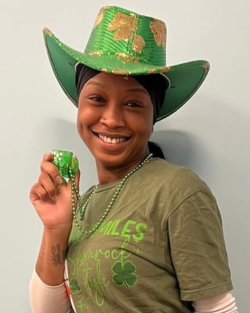
“In the last year, I have gotten two merit raises, not only for my work ethic, but also my knowledge and certification. Definitely invest in your certification.”
— Kayla Johnson, CDA
“I do love that continuing education aspect because you stay current with everything that changes,” says Merklin, noting that certification helped her become a Registered Dental Assistant (RDA) in New Jersey, where passing DANB’s CDA exam is required.
“You’re getting the information that’s current and relevant,” Merklin adds. “There’s a comfort level there — you’ve always done your job correctly, but with that further education, it just helps. It keeps you more current. I do believe that.”
Johnson recognizes that the more education and experience you accrue, the more career benefits you’re likely to earn once hired. “In the last year, I have gotten two merit raises, not only for my work ethic, but also my knowledge and certification,” she explains. “Definitely invest in your certification.”
CDA certification boosts your confidence.
Ask any DANB certificant, and they’ll likely tell you that taking and passing a DANB exam is no easy feat. Certificants consistently report pride in their credentials and more confidence in their day-to-day work.
Gomes, who has held certification since 1998, believes that her skills are sharper than those of dental assistants who are not certified. “I know much more — I’m very confident,” she says, particularly in the critical areas of infection control and sterilization.
Confidence also can go a long way during a dental assistant job interview, where outstanding candidates welcome the opportunity to discuss their work and educational background, passion for the profession, readiness for the new role, and willingness to learn. “My knowledge and practice in orthodontics made me confident,” Johnson says of the job interviews that led to her current role.
CDAs can approach their interviews with more ease. The expertise that CDAs gain in their journey to certification helps them stand out first to the hiring manager, then to their supervisors and colleagues on the dental team. They often feel energized rather than stressed by a busy day in the dental office. And they view each workday as another opportunity for growth.
CDAs also feel well prepared to answer patients’ questions and can communicate this to a potential new employer. “I can truly speak to patients without second-guessing,” adds Merklin, who encourages all dental assistants to become certified, no matter where they are in their career journey. “Just do it! Your confidence will rise, along with your ability to handle anything that comes your way.”
CDA certification helps you climb the career ladder.
During a job interview, experienced candidates can confidently speak not only to where they’ve been — but also to where they hope to go in dentistry. This is especially true for CDAs, who are poised for advancement.
CDAs often grow into thriving leaders in the dental practice, and they are more likely to take on a lead role and train or supervise their colleagues, as shown in DANB’s recent Dental Assistants Salary and Satisfaction Survey. Some CDAs go on to prepare the next generation of dental assistants as instructors and program directors in high schools and beyond, since holding certification often is a requirement for work as an educator. Others may become a dental office manager, take on expanded functions, or become a dental infection control specialist.

“Just do it [become certified]! Your confidence will rise, along with your ability to handle anything that comes your way.”
— Beverly Merklin, CDA, CDIPC, RDA
Merklin says earning not one, but two DANB certifications — including DANB’s Certified in Dental Infection Prevention and Control (CDIPC) certification — led to her having a more senior role at work performing expanded duties.
“Being able to help out [more] gives me greater satisfaction in my career,” Merklin elaborates. “A lot of the offices [seem to] want someone who is going to be able to take the lead and help them out and utilize expanded functions.”
Johnson has found that holding certification is already elevating her contributions as a new orthodontic assistant. “My managers and coworkers have trust in my capabilities as a team member,” she believes. “I feel as though my coworkers are able to rely on me, and we work together better because I have my certification.”
CDAs know their worth and can spot a supportive workplace.
Many practices recognize the importance of credentialing in dental assisting, and they can recommend or require that job candidates earn certification before onboarding or advancing in a new role.
Rose Olague, Ph.D., RDA, shares how PDS Health supports dental assistants through training and career advancement opportunities, helping attract and retain talented professionals, including CDAs. “We help them get the credentials and certifications they need to be successful in a career in healthcare,” Dr. Olague explains.
If a workplace seems like a great employer, an open role in that office can be more appealing to ambitious job-seekers like CDAs. What makes a dental office a great place to work? One indicator is that it supports career growth. Sometimes, this is spelled out in a job ad.
If DANB certification is a requirement or preferred qualification for a candidate, CDAs take it as a sign they’re browsing the best job listings. Merklin says of her own experience navigating job boards: “If the practice was following everything I learned, it seemed like the right place for me to be.”
And it’s even better if the topic of professional development naturally comes up during conversations with the hiring manager.
“I really do interview pretty thoroughly with a provider, because I want to be comfortable, as well as they want to be comfortable with me,” Merklin says. “The same way I want the best for my patients, I want the best for myself and my family as well.”
Resources:
- Looking for a dental assisting role? Explore DANB’s new job board and resources.
- Looking to hire a dental assistant? Reach qualified candidates near you.